


There Is No “ONE” LCC Model: Inside Sun Country’s Unusual Airline Economics

Minneapolis, MN. I had already flown JetBlue, Southwest, Spirit, Frontier and Avelo. By the time I boarded Sun Country in Minneapolis, I thought I had a fairly good idea of what an American low-cost airline looked like. Unexpectedly, Sun Country complicates that definition.

At first glance, Sun Country (IATA: SY) looks familiar. It flies Boeing 737s, sells a low base fare and charges separately for many parts of the travel experience. Its network is built largely around leisure demand, and its home airport, Minneapolis–St. Paul, puts it head to head with Delta Air Lines.
But behind the passenger operation sits a substantial charter business. Behind that sits an Amazon cargo operation. Together, charter and cargo generated roughly one dollar in every three Sun Country earned in 2025. Enough to change how the airline thinks about aircraft, crews, utilization and seasonality.
That makes Sun Country more than an unusual airline. It is a test case. The interesting question is not only how its model differs from other low-cost carriers, but whether diversification actually produces financial resilience — and what financial, operational, marketing and human costs are required to sustain it. With Allegiant now owning Sun Country, the merger turns that question into a live experiment.
Low Cost Is a Goal, Not a Formula
People use “LCC” and “ULCC” like they’re standard airline templates. In reality, they aren’t! There’s no checklist that turns an airline into a low-cost carrier. Each airline gets there its own way: which planes it flies, how hard it flies them, which airports it picks, and how much comes with the ticket.
Frontier packed more seats into its Airbus jets and charged extra for almost everything else. Spirit took that idea even further and was, for years, the purest ULCC in America, until it stopped flying on May 2, 2026. Allegiant went the other way on utilization. It flies hard in peak season and parks planes when demand is soft. Avelo borrowed a lot from Allegiant’s playbook.
Southwest built its brand on simplicity and free bags, then started charging for bags in May 2025 and moved to assigned seats in January 2026. JetBlue started cheap and kept moving upmarket. It’s now rolling out a domestic first class called BlueFirst.
Sun Country doesn’t fit either box. Its own 2025 annual report calls the company a “new breed of hybrid low-cost air carrier,” and that’s how I’ll describe it here: a hybrid LCC, not a ULCC. Instead of trying to be the cheapest airline in the sky, it tries to keep one airline organization busy in more than one business.
Here’s a more useful way to compare these airlines than the three-letter labels:
Airline | What comes with the fare | How hard it flies each plane | Network | Money beyond scheduled passengers |
Frontier | Very little, heavy unbundling | Traditionally high, cut back in 2025 | Big leisure markets | Very little |
Allegiant | Very little, adding perks in 2026 | Deliberately low and very seasonal | Small cities to leisure spots | Some charter |
Avelo | Very little | Low frequency | Secondary airports | Government charter (exited Jan. 2026) |
Southwest | Now sold in fare bundles, assigned seats | High frequency | National, point-to-point | Very little |
JetBlue | Tiered, from Main up to Mint | High | Northeast, transcon, transatlantic | Very little |
Sun Country | Moderate product, unbundled fare | Low, but moved between businesses | Built around MSP | About a third: charter + cargo |
If being the cheapest were all that mattered, the ULCCs would have had the best 2025. They didn’t. Sun Country had the best operating margin in this group at 8.9%, while Frontier and JetBlue both lost money (Figure 1).
That chart doesn’t prove Sun Country’s model caused the result. The airlines fly different networks, they count things differently, and Allegiant is shown airline-only. But it was enough of a surprise that I wanted to understand how Sun Country actually makes money.
Sun Country Is Not One Airline Business
The easiest place to start is the revenue mix, but you have to read it carefully. Sun Country reports “Scheduled Service” revenue as base fares only. The bag fees, seat fees and snacks those same passengers buy are booked separately as “Ancillary.” If you only look at the fare line, the passenger business looks smaller than it really is. I made exactly that mistake in my first draft.
Put fares and fees together, and regular passengers still paid for about 62% of Sun Country’s 2025 revenue. Charter and cargo added 33.7% (Figure 2).
That share moves around a lot during the year. In the third quarter of 2025, Sun Country was shrinking its passenger schedule to free up pilots for more Amazon flying, and charter plus cargo hit 40% of revenue (Figure 3). CFO Torque Zubeck called it out in the earnings release:
“Cargo and charter combined to generate 40% of our total revenue this quarter.”
Torque Zubeck, CFO, Sun Country Airlines
So Sun Country has not escaped the passenger business. It’s still mostly a passenger airline. What is different is that every dollar of growth doesn’t have to come from selling one more seat to Cancún.
Charter: The Business Passengers Rarely See
Charter brought in $224.2 million in 2025, up almost 14% from 2024. About 72% of charter flying was under long-term contracts. The customers include the U.S. military, college and pro sports teams, and casinos. Sun Country has flown every Major League Soccer team since signing a five-year deal in 2021, and it’s a regular on NCAA championship trips.
The math is different from a normal flight. On a scheduled flight, Sun Country picks the route, takes the risk and tries to sell 186 seats one by one, plus bags and snacks. On a charter, one customer buys the whole plane, and many contracts pass the fuel bill straight through to that customer.
The clever part is how charter fits around the schedule. CEO Jude Bricker gave an example on Aviation Week’s Window Seat podcast in April 2025. Sun Country might fly a popular Thursday flight to Las Vegas and bring the plane home on Sunday. That leaves about 48 hours in Vegas, and Bricker said the airline is pretty confident a charter will turn up for it, like a college football team, even though it doesn’t know which one when the schedule is built.
Sun Country calls these combined trips “Power Patterns.” A weak scheduled flight can be swapped out for a charter that pays better. The usual airline rule is that a plane on the ground earns nothing, so keep it flying. Sun Country asks a different question: does this plane need to fly the same kind of trip all year?

Cargo: Renting Out an Airline to Amazon
Cargo makes the model even stranger. Sun Country doesn’t run its own freight network like FedEx, and this isn’t belly cargo under passenger flights. It flies Boeing 737-800 freighters for Amazon under what the industry calls a CMI deal: crew, maintenance and insurance.
Who does what | Amazon | Sun Country |
737-800 freighters | Supplies them | Flies them |
FAA operating certificate |
| Flights run under Sun Country’s |
Pilots |
| Provides |
Line maintenance |
| Provides |
Heavy maintenance | Pays for it |
|
Insurance |
| Provides |
Fuel | Pays for it |
|
Loading and unloading | Handles it |
|
Network and schedule | Sets it, roughly every two months | Flies it |
Put simply, Amazon brings the planes, the packages and the schedule. Sun Country brings the pilots, the mechanics and the paperwork that make it a legal airline. It’s selling the ability to run an airline.
The freighter fleet grew from 12 to 20 in 2025, and the two companies agreed on two more in early 2026, taking it to 22. Cargo revenue jumped 44.6% to $155 million, by far the fastest growth anywhere in the company. The contract runs to October 2030.
Cargo also has a good backstory. Sun Country signed the Amazon deal in December 2019. Bricker told Window Seat that it “effectively saved the company with its timing,” because when COVID hit a few months later, the freighters kept flying while passenger demand disappeared. Today he describes cargo as “absolutely stable,” flown at the same level every day of the year, which is exactly what lets the passenger schedule swing up and down around it.
There’s a catch, though. Amazon is Sun Country’s only cargo customer. So the airline is spread across three businesses, but one of the three depends on a single company. I don’t think that makes cargo a bad bet. It’s still a real risk, and Sun Country’s own annual report lists it as one.

Follow the Money
On paper, Sun Country’s track record is strong. Revenue grew from $402 million in 2020 to $1.13 billion in 2025, almost three times as much, and its adjusted operating margin has been positive every year since the pandemic year of 2020 (Figure 4).
But 2025 is more complicated than that line suggests. Revenue hit a record, up 4.7%. Operating income went the other way, down 5.1% to $100.6 million, and the operating margin slipped from 9.9% to 8.9% (Figure 5).
The biggest reason was labor. Salaries, wages and benefits rose 14% to $372.6 million. That’s about 36% of all operating costs, and more than Sun Country spent on fuel (Figure 6). Sun Country pointed to pilot hiring, a scheduled pilot pay raise at the end of 2024 and a new flight attendant contract. Maintenance went up almost 17% too, partly from unplanned repairs and partly from heavy checks moved up from 2026.
Fuel actually helped. It fell 10% in 2025, which made every airline’s numbers look better. Without that, the squeeze would have shown up even more.
So I’d be careful saying cargo made Sun Country more profitable. It made the airline bigger and steadier. It didn’t make the people and the planes any cheaper.
Q3 2025: Watching the Airline Rearrange Itself
The third quarter of 2025 is the closest thing to a controlled experiment. As the Amazon fleet grew, Sun Country moved pilots out of passenger flying and into cargo and charter. Scheduled block hours fell 10.9%. Charter rose 11.1%. Cargo jumped 33.7%. And total flying still went up 3.8% (Figure 7).
This is my favorite chart in the piece. Sun Country decided what kind of flying to do.
The switch wasn’t smooth, though. While total flying grew less than 4%, labor costs rose 15% and maintenance 13.5%. Cost per available seat mile (CASM) rose 10.3% (Figure 8). The quarter’s operating margin fell to 3.9%, and management warned that unit costs would stay high until it added passenger flying back in 2026.
Diversification gave Sun Country somewhere else to send its pilots. Those pilots still got more expensive every quarter.
The 2026 Fuel Test
Then 2026 put every low-cost model under the same pressure at once. After the U.S.–Iran conflict began in February, jet fuel prices shot up. In June, IATA said it expects jet fuel to average $152 a barrel this year, almost 70% more than in 2025, with fuel rising from 25.4% to 31.4% of airline costs (Figure 9). It cut its forecast for global airline profits in half.
You can see it in the airlines’ own numbers. Sun Country paid $2.56 a gallon in 2025. In its first weeks under Allegiant, it paid $3.87. Allegiant paid $4.19 in the second quarter of 2026, up from $2.42 a year earlier (Figure 10).
So when the same fuel shock hits everyone, who has the most room to move?
Bricker gave a simple way to think about it in a May 2026 interview with Twin Cities Business. Each Sun Country passenger burns about 16 gallons of fuel. So every $1 rise in the price per gallon means Sun Country needs roughly $16 more from each passenger just to make the same money. With fuel running about $2 above plan, that’s $32, or about a fifth of an average 2025 ticket (Figure 11).
Bricker's answer wasn’t to raise every fare. Sun Country cut the flights with the cheapest fares: Tuesdays, Wednesdays, May and September. Its May schedule ended up about 10% below plan. And Bricker said about 40% of Sun Country’s flying, the Amazon and charter work, comes with fuel costs passed through to the customer.
“Our business will outperform by a wider margin the more stress there is in the industry.”
Jude Bricker, outgoing Sun Country CEO
That’s a bold claim, so I tried to check it. The early numbers mostly back him up. In its first seven weeks as part of Allegiant, from May 13 to June 30, Sun Country posted a 10.4% adjusted operating margin, better than Allegiant’s own 9.0% (Figure 12). Charter and cargo were still about 35% of its revenue.
Two caveats. Seven weeks is a short window, and early summer is a good season for Sun Country. And on a GAAP basis, once $26.4 million of merger costs are counted, the Sun Country unit actually lost money.
Meanwhile, the purest ULCC in the country didn’t make it at all. Spirit shut down on May 2 after talks over a roughly $500 million federal rescue fell apart. Its whole model was built on being the cheapest, which left it almost no room when fuel spiked.
How the Flying Actually Works
Airline people are taught to hate idle airplanes. A parked 737 still costs money every day. Sun Country pushes back on that.
“We’re purely focused on matching our capacity to demand. That’s the secret sauce.”
Jude Bricker, outgoing Sun Country CEO
On the podcast, Bricker explained that Sun Country builds each day of its schedule on its own. The planners ask what’s the best thing a plane can do right now, then the second best, then the third. Either they run out of planes, or they run out of flying worth doing, and the rest of the fleet sits. What makes it okay to leave a plane on the ground, he said, is having other work for it: charter and cargo.
It also helps that Sun Country buys its passenger jets used and owns them, so a parked plane costs relatively little. And the whole fleet is one aircraft family, the 737NG, so the same pilots can fly a scheduled leg, a charter and a cargo run on the same trip.
To be fair, a passenger jet can’t turn into a freighter overnight. Freighters stay freighters. The flexibility is mostly in the people and the schedule, not the metal.
Allegiant: Flexibility by Flying Less
Allegiant gets to a similar place by a different road. Its annual report literally calls it a “low-cost, low utilization” airline. In July 2025, its busiest month, Allegiant flew each plane 8.6 hours a day. In September, its slowest month, just 4.6 hours, about 47% less. Sun Country averaged 7.1 hours for the full year (Figure 13).
Allegiant also barely flies on its weakest days. Only 12% of its 2025 seat miles were flown on Tuesdays and Wednesdays. If it flew evenly all week, that number would be closer to 29% (Figure 14).
This sounds backwards if you learned airline economics from a textbook, which says to keep expensive planes in the air. But that only works if the next flight is worth flying. Allegiant, like Sun Country, buys a lot of its planes used, so a jet sitting in September doesn’t cost much. Frontier is the opposite. Its annual report still lists high utilization as part of how it keeps costs low, although even Frontier flew its planes less in 2025.
So here is the simplest way I can put the merger: Allegiant flexes by flying less. Sun Country flexes by flying something else. Both ignore the old idea that a plane has to be in the air as much as possible just because it exists.
Avelo: When a Second Business Does Not Fit
Avelo is a useful counterexample, because it shows a second business isn’t automatically a good thing. In 2025, Avelo started flying deportation charters for the Department of Homeland Security out of a separate base in Mesa, Arizona, using three 737-800s. That work needed its own base, its own scheduling and its own crews, and it looked nothing like Avelo’s leisure network.
By January 2026, Avelo was out. CEO Andrew Levy told employees the program had promised more financial stability but had put the airline in the middle of a political controversy, according to CNBC. The revenue turned out to be unpredictable, and the costs added up. Avelo closed the Mesa base on January 27.
Compare that with Sun Country, whose charter and cargo flying uses the same aircraft family, the same crew base and mostly the same scheduling system as its passenger flights. A second business only helps if it fits the first one.
Low Cost Without Looking Cheap
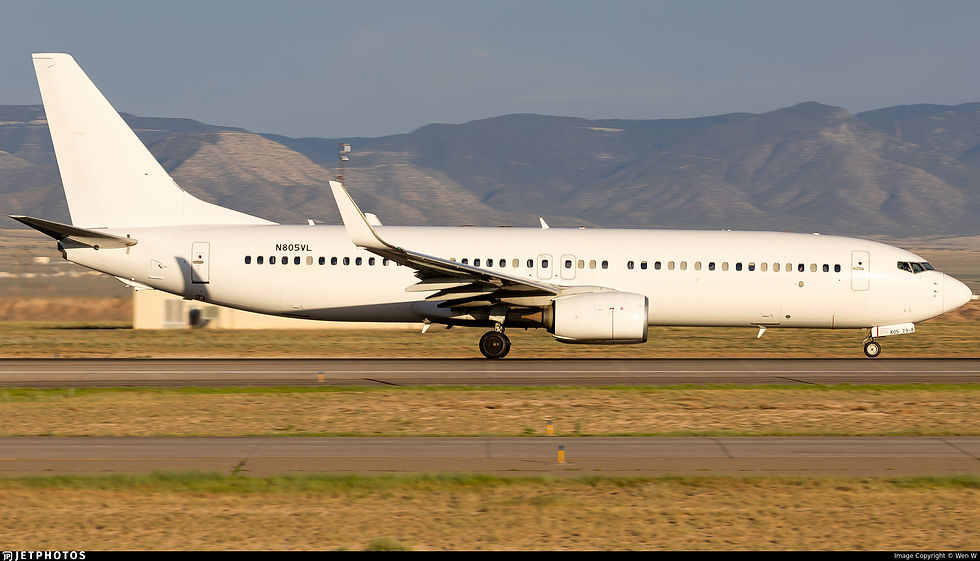
This part doesn’t show up in the financial statements, but I noticed it as soon as I sat down. Sun Country wants ULCC-style economics without making passengers feel like they’re on a ULCC. The fare is unbundled. But soft drinks are free, there is streaming entertainment, and the first rows are sold as “Best Seats” with extra legroom. I’ll come back to my own flight at the end, but the short version is this: the fare felt low-cost, and the cabin didn’t.
Bricker has been open about who he is really competing with, and it isn’t Spirit or Frontier. On Window Seat, he said Delta carries about 60% of passengers who start their trip in the Twin Cities, and Sun Country about 20%. Because Sun Country’s average flight is close to 1,200 miles, he argued it has to offer a better product than the ULCCs do. His target was blunt:
“We want to be better than Delta’s basic economy product.”
Jude Bricker, outgoing Sun Country CEO
Fees still matter a lot. Sun Country made $70.12 in ancillary revenue per passenger in 2025, a bit more than Frontier’s $67.57, on an average total fare of $166.17 (Figure 15). So “hybrid” still comes with plenty of fees. The difference is a cabin that feels fair.
The Minnesota Franchise
Sun Country’s biggest brand asset is its hometown. It calls itself Minnesota’s hometown airline, it’s the second-largest carrier at MSP behind Delta, and it served about 95 markets from MSP in 2025. About 80% of its sales come through its own website, app and call center, and its email list has roughly two million addresses.
In September 2025, it launched a new Visa Signature card with Synchrony, along with a new Plus status tier. Chief Marketing Officer Colton Snow said the goal was “creating more rewarding travel experiences, fostering customer loyalty.” That card now has a price tag, too: Allegiant’s acquisition accounting values the card relationships at $8.4 million.
A Brand With an Expiration Date
This is the detail that surprised me most. When Allegiant bought Sun Country, it valued the Sun Country trademarks at $13.2 million and gave them a two-year useful life, because it plans to phase the name out. On Allegiant’s books, the brand is already being written down.
Allegiant’s vice president of network planning, Kristen Schilling-Gonzales, told USA Today in July: “After we start flying under a single operating certificate, it will be the Allegiant brand going forward.”
That leaves a question no spreadsheet can answer. How much of Sun Country’s pricing power in Minneapolis comes from the name itself? Travelers might be fine with a bigger network and still feel differently when they see Allegiant on the tail.
The People Part
The part of this merger that sounds softest might be the hardest. Sun Country ended 2025 with 3,281 employees, and about two-thirds were in unions. Pilots, flight attendants, mechanics, dispatchers and ramp workers each have their own contract (Figure 16).
This matters because the whole flexible model runs on people. Work rules decide how crews can be scheduled. Scheduling decides how much each plane flies, and that drives cost. Merging seniority lists decides people’s careers.
Two Labor Systems Have to Become One
Sun Country’s 682 pilots are represented by ALPA, and their contract has been open for renegotiation since December 2025. Allegiant’s pilots are Teamsters, and they ratified a new contract on July 31, 2026 with nearly 80% support.
Before the two pilot groups can really combine, the National Mediation Board has to settle who represents them, the seniority lists have to be merged, and joint contracts have to be negotiated. Bricker told Twin Cities Business the joint contracts alone could take until the end of the decade.
Then there is geography. Sun Country is built around Minneapolis, where every plane starts and ends its day. Allegiant runs about two dozen bases around the country. And Sun Country’s headquarters jobs are moving to Las Vegas. Bricker said there were more jobs in Vegas than people willing to move.
The Summer the Flexibility Ran Out
This summer, the people problem stopped being theoretical. On July 20, Sun Country cut about a third of its planned September flying. It suspended seven routes from MSP and cut frequencies on others, including Chicago O’Hare, the route I flew. Allegiant CEO Greg Anderson blamed “higher-than-expected front-line crew attrition combined with increased cargo flying,” according to ch-aviation. He later said most of the pilots leaving were junior pilots based at MSP, many of them heading to Delta, which had sharply increased its hiring.

This is the weak spot in the model. Cargo flying is under contract, so when pilots get scarce, it’s the passenger schedule that gets cut. And the single Minneapolis crew base that lets pilots move between three businesses also means that when Delta starts hiring across the field, all three businesses are drawing from the same shrinking pool.
Relations with the pilots are tense, too. Sun Country went to federal court in March 2026 to overturn an arbitration award that ordered back pay for its instructor pilots, and ALPA countersued to enforce it. Sun Country’s ALPA chair, Sam Larson, said the airline “can’t claim a pilot and captain shortage while simultaneously fighting a multimillion-dollar award” owed to the pilots who train new ones, as reported by AirlineGeeks.
What a Captain Told Me
My own reporting added a more personal layer. A Sun Country captain I spoke with said they were disappointed about the acquisition, and described uncertainty among some pilots about Allegiant’s labor reputation and where the combined airline is headed. That’s one person’s view, not a survey of the pilot group. But it shows where integration risk stops being a line in a filing and starts being about people.
What Allegiant Bought
Allegiant closed the deal on May 13, 2026, for about $976 million in cash and stock. It’s targeting at least $140 million a year in synergies within three years.
Merger detail | Where it stands |
Closed | May 13, 2026 |
Price | About $976 million ($4.10 in cash plus 0.1557 Allegiant shares per Sun Country share, plus other payments) |
Synergy target | At least $140 million a year, within three years of closing |
Integration costs so far | $55.2 million in Q2 2026; $64.8 million in the first half |
Today | Two airlines, two FAA operating certificates |
Single operating certificate | Allegiant expects early 2028; Bricker had estimated 14 to 24 months after closing |
Brand | Allegiant only, once the single certificate arrives |
Sun Country fleet (June 30, 2026) | 44 737-800s, 3 737-900ERs, 22 737-800 freighters |
So what did Allegiant actually pay for? Bricker answered that pretty directly. He told Twin Cities Business that Sun Country had three things Allegiant could not build on its own: its 72 airplanes (“You can’t go buy that fleet in today’s market”), a well-defended position at MSP and the Amazon cargo business.
The purchase accounting tells a similar story. Almost half the price, $465.7 million, went to goodwill, which Allegiant says mostly reflects the workforce and the savings it expects. The Sun Country name got $13.2 million (Figure 17). Allegiant is treating the people as something to keep and the brand as something to retire.
The combined airline is also more complicated than either one was alone. It now flies Airbus and Boeing passenger jets, Amazon freighters and charters, under two FAA certificates for now (Figure 18). Low-cost airlines usually win by keeping things simple. The new Allegiant is betting that flexibility is worth the extra complexity.
Back on Board: A View From the First Row
None of this was visible from the first row of the 737. Terminal 2 at MSP already feels different from Delta’s Terminal 1. It’s smaller, full of low-cost and niche airlines, with self-service check-in. I had booked a security reservation slot, and the lane was nearly empty.

About fifteen minutes after takeoff, the crew started the drink service. We were only in the air for about 50 minutes, and I still got more service than on my Delta flight into Minneapolis the day before. The free list was simple: coffee, juice, soft drinks and water. The coffee was Caribou, a Minnesota brand, which gave it a local feel. The snacks for sale were priced reasonably for a low-cost carrier. Sun Country charged like an LCC, but once on board it didn’t always feel like one.
And the plane at my gate was only one part of Sun Country. Somewhere else, another Sun Country crew might have been flying a college team to an away game, and another flying an Amazon freighter through the night. After talking with the captain, the flight felt a little different to me, too.
More about my experiences, stay turned for Flying With Chris | Vol.4 on October 12.
The Model May Outlive the Name
Sun Country is interesting because it was never just a passenger airline. Its scheduled flights chase peak leisure demand and fees. Its charter business gives the same planes and pilots more work. Its Amazon flying adds a steady, contracted layer underneath.
The numbers suggest it works. Sun Country had the best 2025 margin of the five airlines I compared, while Frontier and JetBlue lost money. When fuel spiked in 2026, Spirit shut down, and Sun Country’s first weeks under Allegiant held up.
But that resilience came at a cost. Cargo growth pushed up unit costs. Labor got more expensive. Amazon is a single customer. And this summer showed the hardest limit of all: the pilots the whole model depends on can leave, and a lot of junior ones did.
Frontier bet on density. Spirit bet on unbundling, and lost. Allegiant built a network around flying selectively. Avelo tried a second business and found it didn’t fit. Southwest and JetBlue moved toward premium. Sun Country built three businesses on one airline.
They are all trying to answer the same question: how do you make a plane, and everyone around it, earn money without making the ticket expensive?
For Sun Country, the answer was never just the passenger in the seat. Allegiant has now paid $976 million betting that answer survives the merger. On Allegiant’s books, the Sun Country name has about two years left. You can’t write off a workforce on a schedule like that. The people flying Sun Country’s last years will decide whether the model outlives the paint.
For now, it still says Sun Country on the tail.

Sources
Sun Country Airlines Holdings, 2025 Form 10-K
Sun Country, Q4 and full-year 2025 results (Feb. 5, 2026)
Sun Country, Q3 2025 results (Oct. 29, 2025)
Sun Country, February 2025 investor presentation
Sun Country, Visa Signature card launch with Synchrony (Sept. 23, 2025)
Aviation Week, Window Seat podcast with Jude Bricker (Apr. 17, 2025)
Twin Cities Business, Q&A with Jude Bricker (May 8, 2026)
Allegiant Travel Company, 2025 Form 10-K
Allegiant, Q4 and full-year 2025 results
Allegiant, Q2 2026 results (Aug. 4, 2026)
Frontier Group Holdings, 2025 Form 10-K and Q4 2025 results
Southwest Airlines, Q4 and full-year 2025 results and assigned seating
JetBlue, Q4 2025 results and BlueFirst announcement
NPR, Spirit Airlines ceases operations (May 2, 2026)
CNBC, Avelo to end ICE deportation charters (Jan. 7, 2026); AeroTime, Avelo exits ICE flight program
ch-aviation, Crew attrition, cargo demand force cuts at Sun Country
AirlineGeeks, Rival hiring surge drains Sun Country pilot ranks; Sun Country, ALPA trade lawsuits; Sun Country brand will be phased out

